
2026 Report
The opportunity of running on New Zealand-made energy.
The opportunity
Going electric changes the maths at every level.
Homes can save thousands every year with electric appliances and cars running on a combination of the grid, solar and batteries.
Communities can save millions, create jobs and keep money flowing through the local economy.
The country can save billions, while increasing energy security and slashing emissions.
Drop your email and we'll send you the Electric Homes & Vehicles 2026 report.
Note: for long-term representation, the volatile fuel price rises seen in 2026 have not been included.
Watch
Step inside a fully electric New Zealand home and see how the grid, solar and batteries work together to slash the bills.
Report highlights
Our last report in 2024 showed New Zealand was one of the first countries in the world to reach the electrification tipping point - it was cheaper to buy, finance and run electric appliances and cars than gas, petrol and diesel ones.
We are much further past that tipping point now, and the savings gap between these two ends of the spectrum has now doubled.
Electrification slashes bills
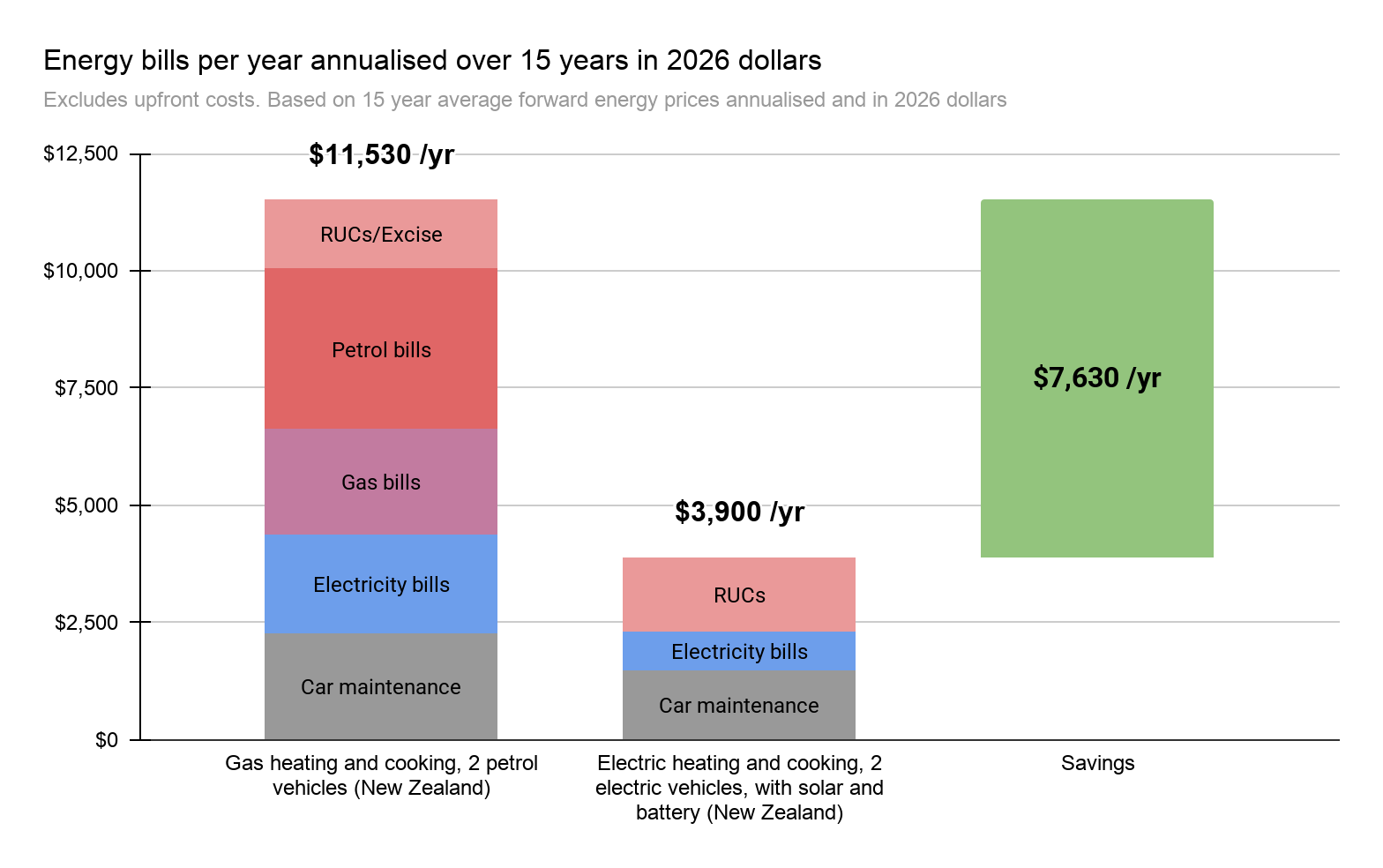
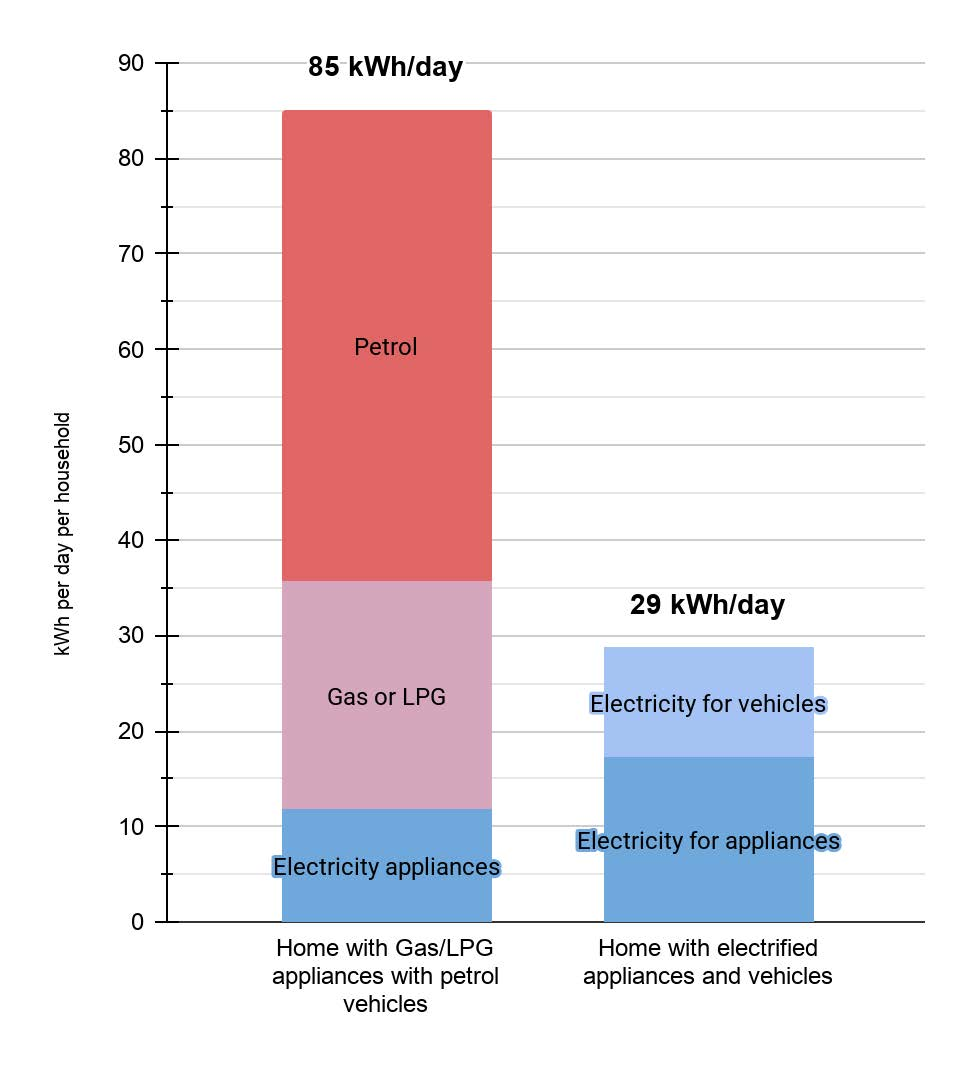
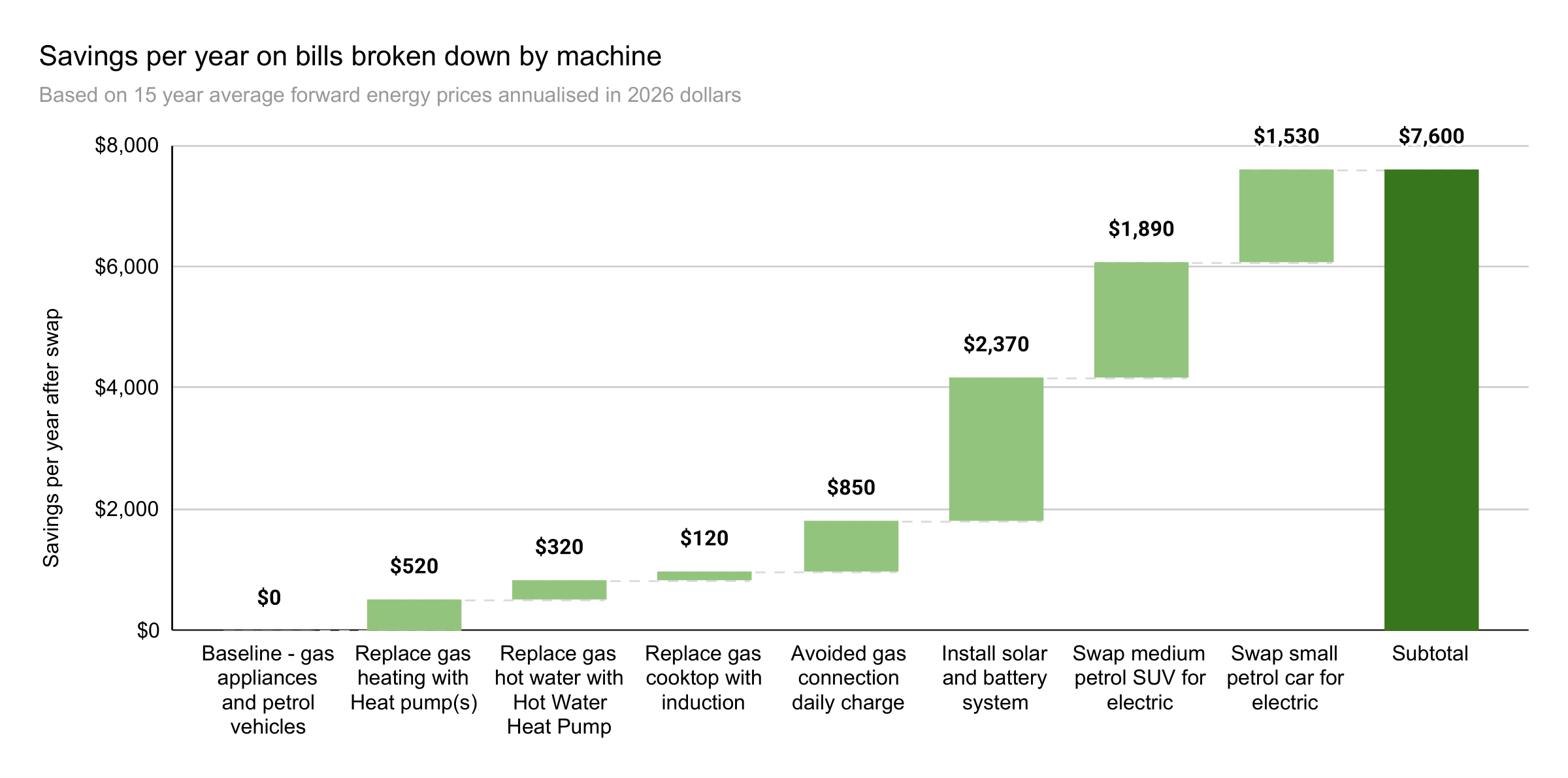
An average New Zealand home using gas appliances and petrol vehicles is losing out on around $7,600 in savings on its energy bills every year compared to a home with electrified appliances and vehicles plus a solar and battery system.
Upfront costs included
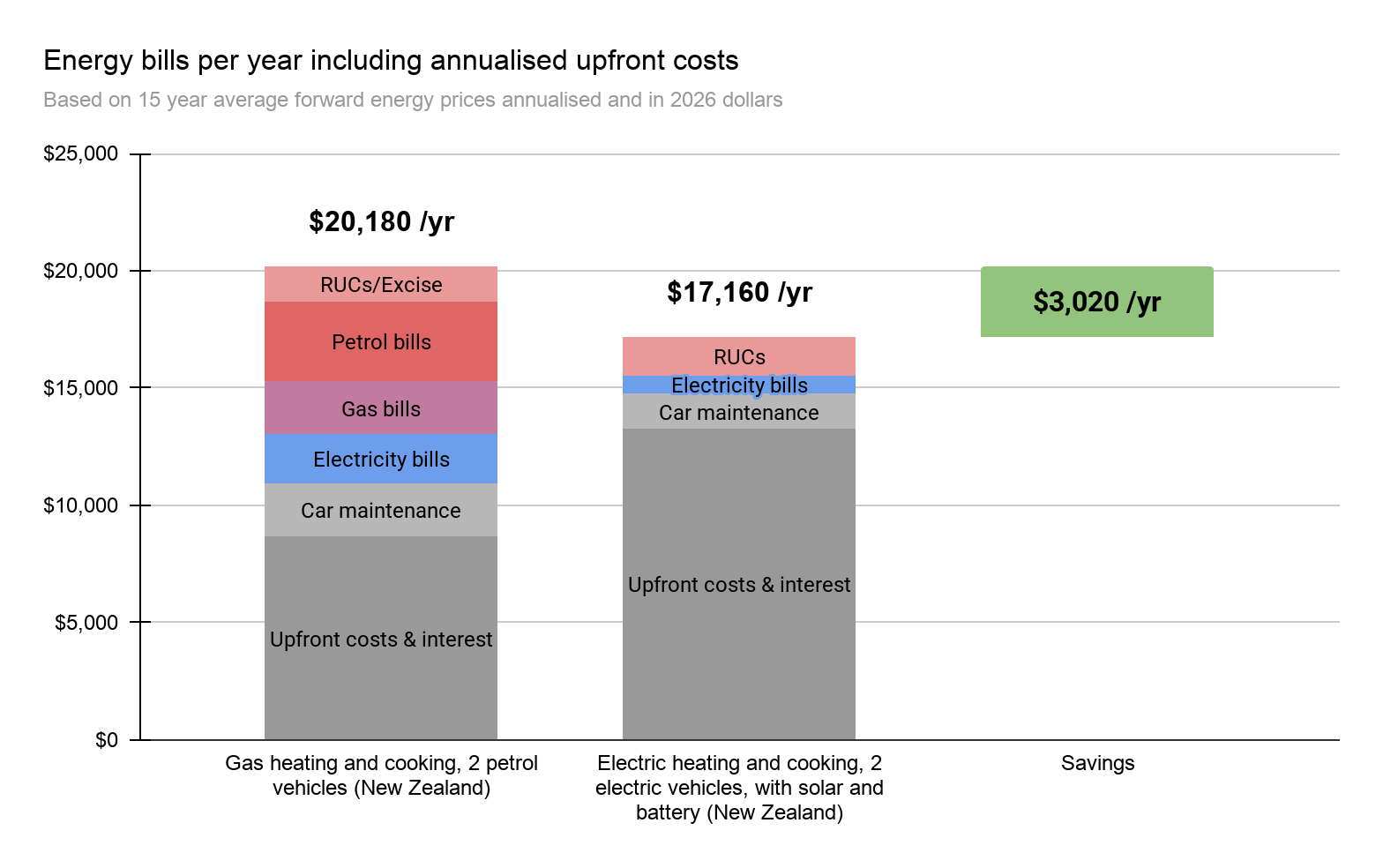
With upfront costs and loan repayments included, an all-electric home is still $3,000 net better off per year, and a net $45,000 better off over 15 years.
Market failure
Everyone in New Zealand technically can afford to electrify and save money doing so. The problem is that not everyone can access those savings, because they need the capital to make those decisions.
There is a clear market failure in the accessibility of these savings - caused by financial products, energy system regulation, policy, and information asymmetry.
Ramping it up
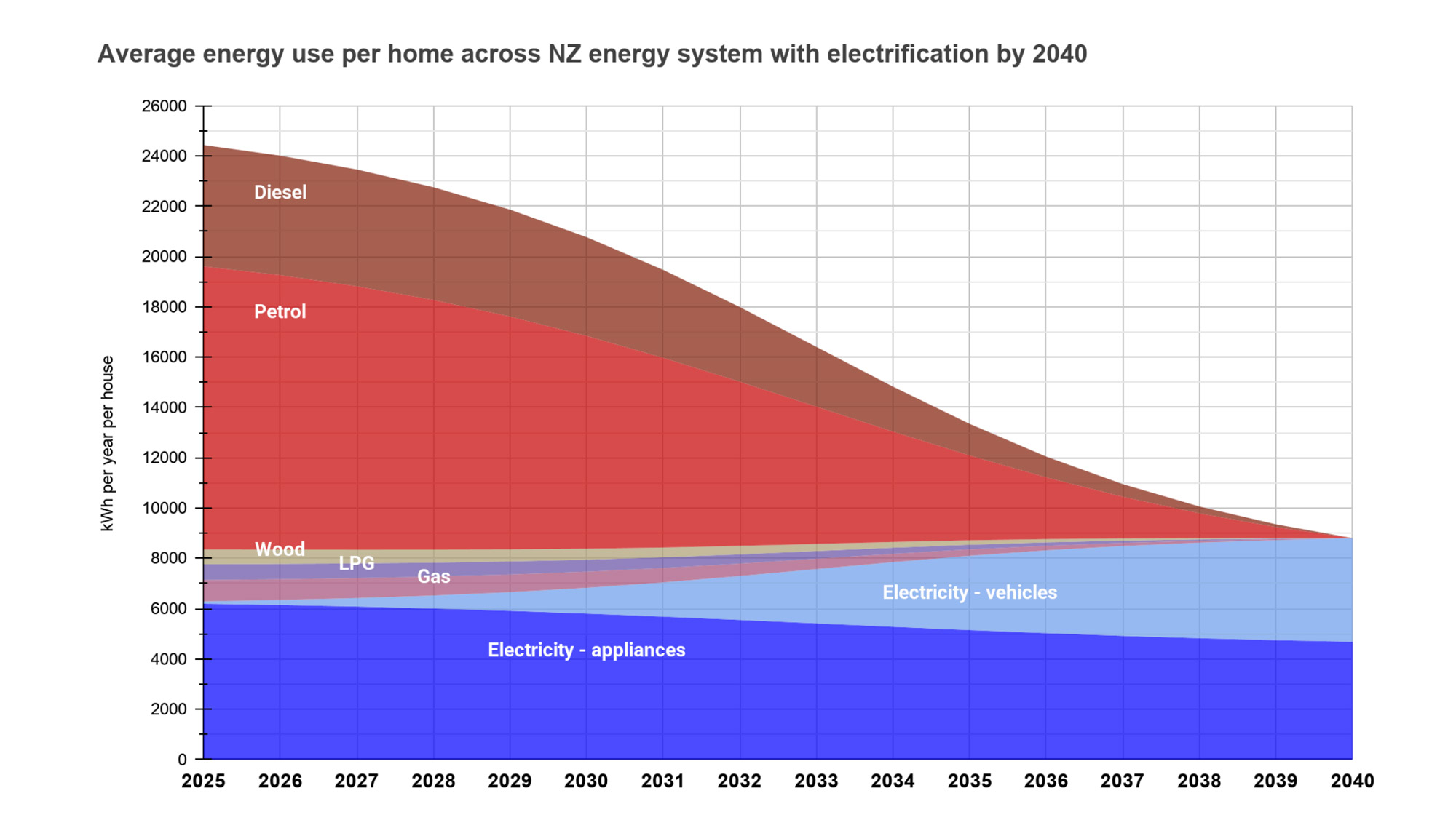
For a community of 10,000 homes, electrification creates bill savings of $6.6 million per year and net savings of over $32 million across 15 years. Nationally, bill savings are $12.9 billion per year and net savings $61 billion over 15 years to 2040 - plus around 58,000 jobs.
Who uses the energy
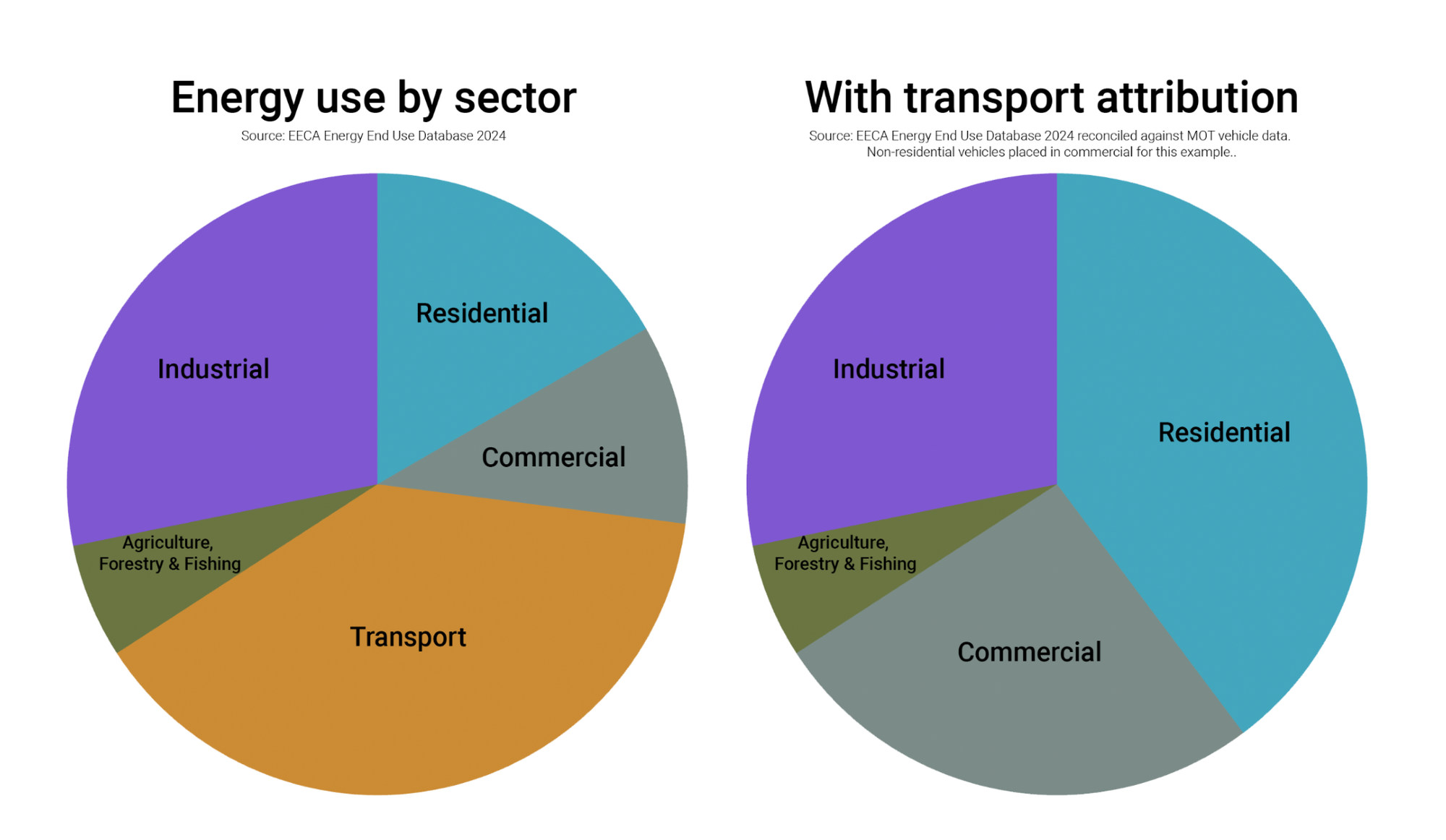
Of the roughly five million vehicles on New Zealand roads, around four million park at households. Once transport is captured, household decision-making is responsible for the largest proportion of energy use.
Energy security
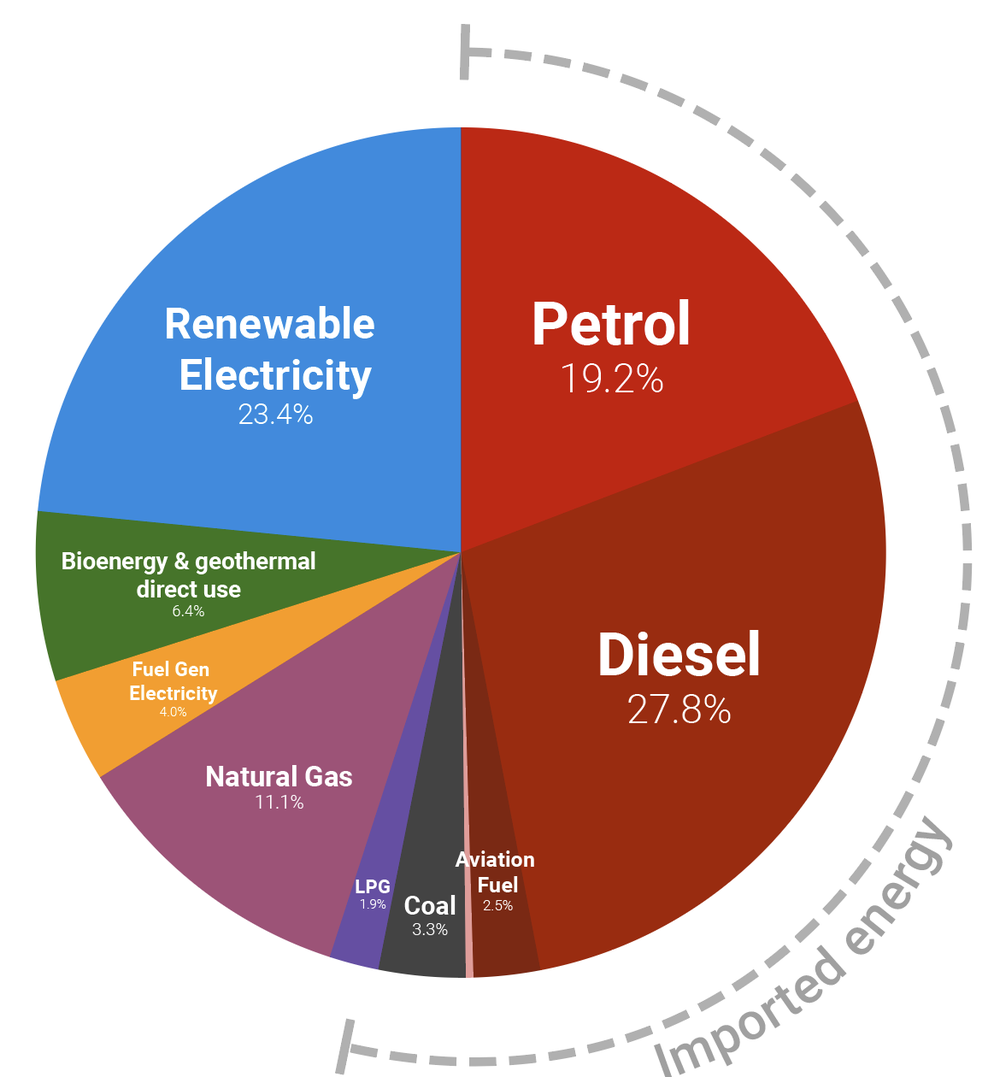
New Zealand spends around $30 billion on energy per year - about $19.5 billion on fossil fuels, most of it imported, plus $11 billion on electricity. Household electrification would remove around half of our imported fossil fuels.
Another tipping point
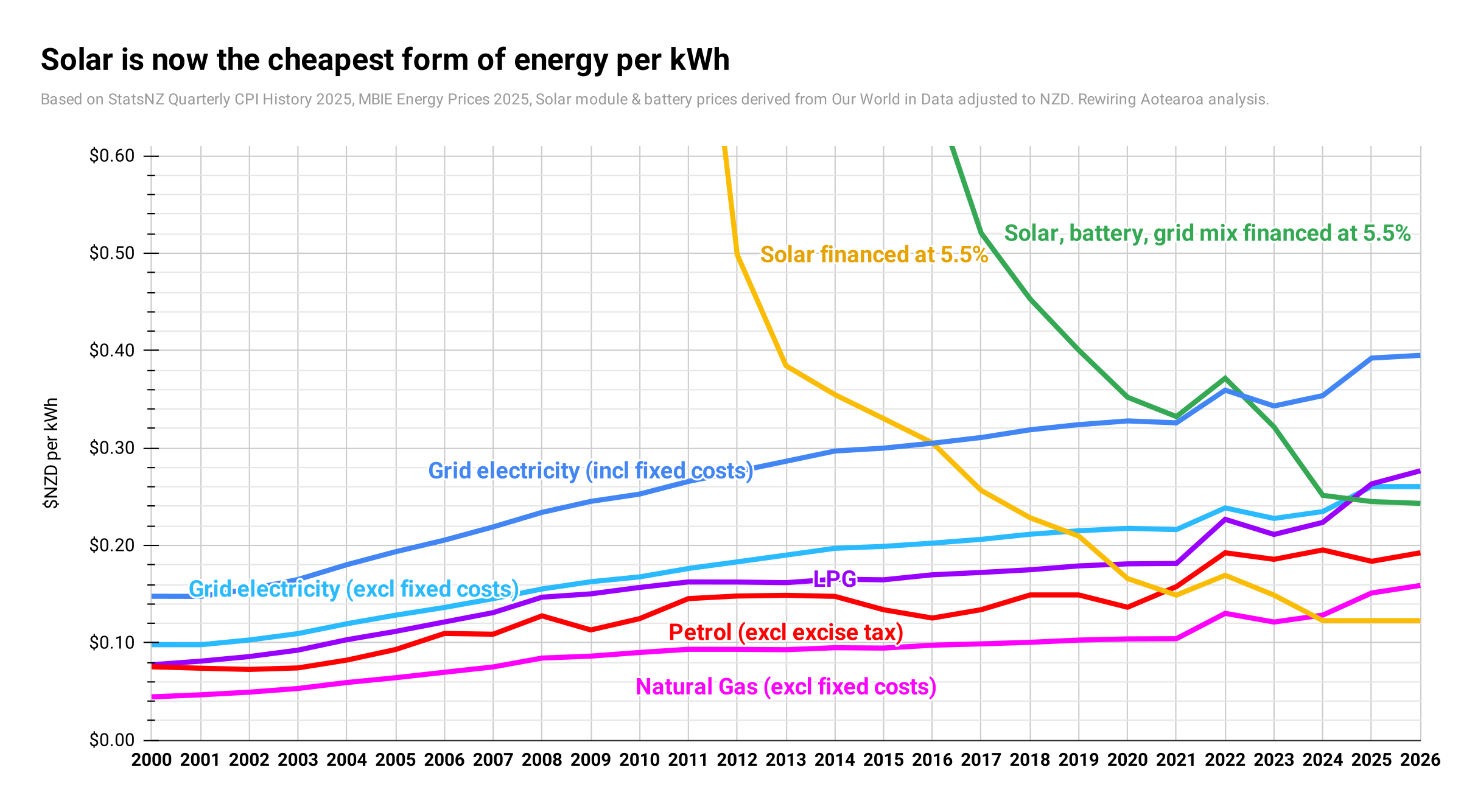
Grid electricity, gas, petrol and diesel have all risen faster than inflation. But the price of solar and batteries keeps falling - and is now cheaper than grid electricity.
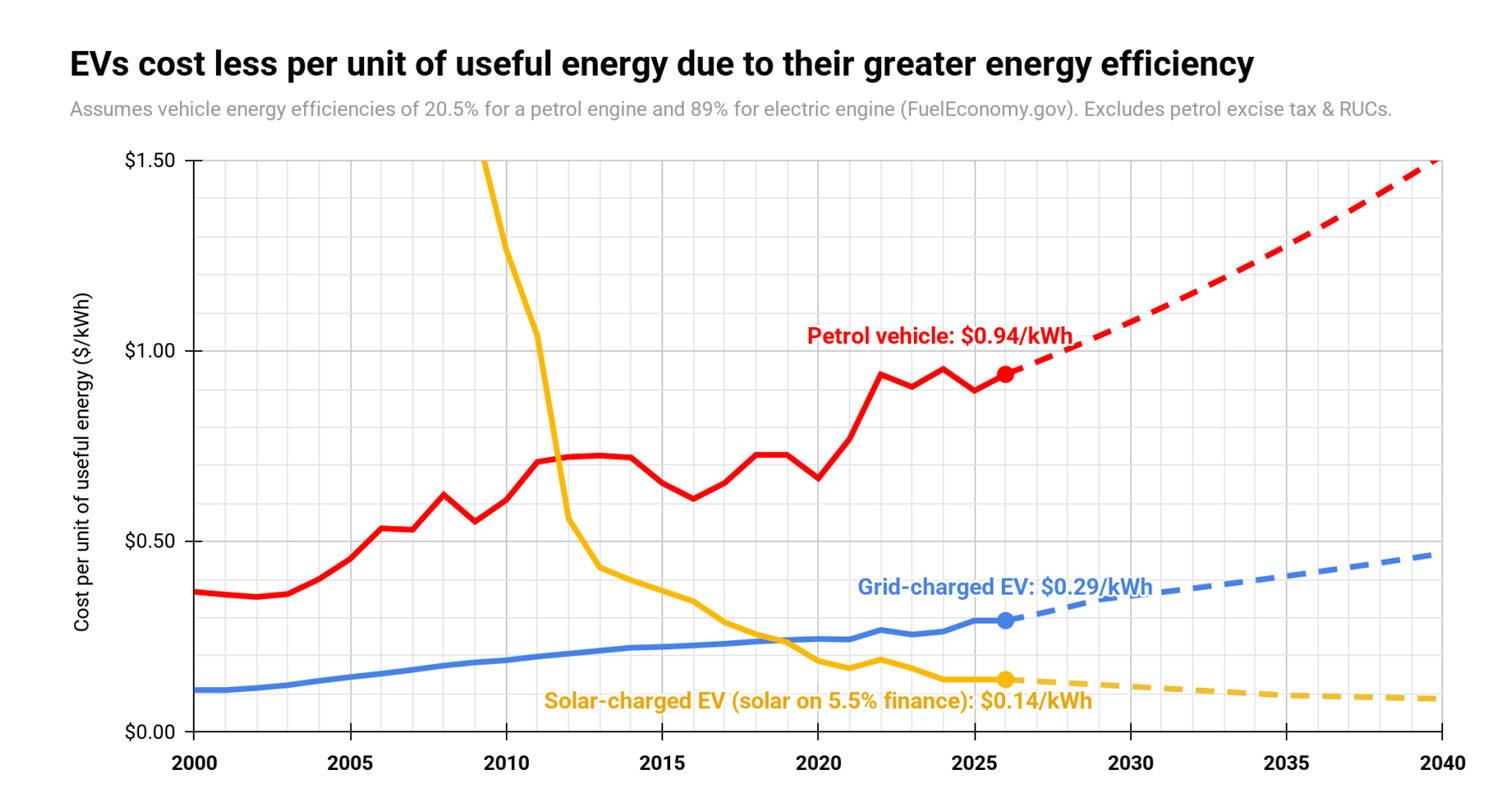
The same is true on the road. An electric motor turns far more of its energy into motion than a petrol engine, so even on grid power an EV runs at a fraction of the cost per unit of useful energy - and charged from your own solar, it is cheaper still.
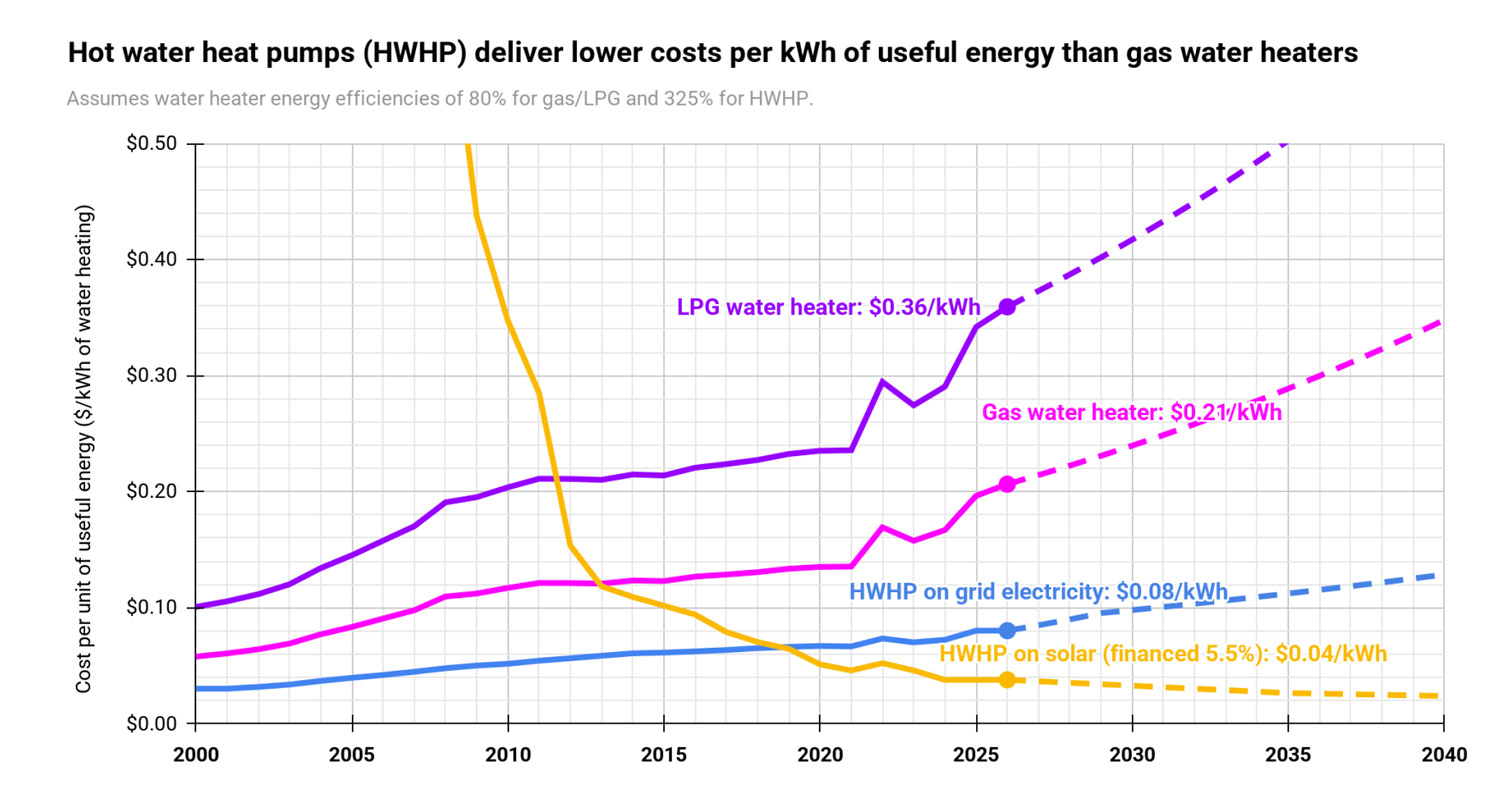
And it holds in the hot water cupboard. A hot water heat pump is so efficient that even on grid electricity it beats gas and LPG per unit of useful energy - and on solar it is cheaper again.
Distributed energy
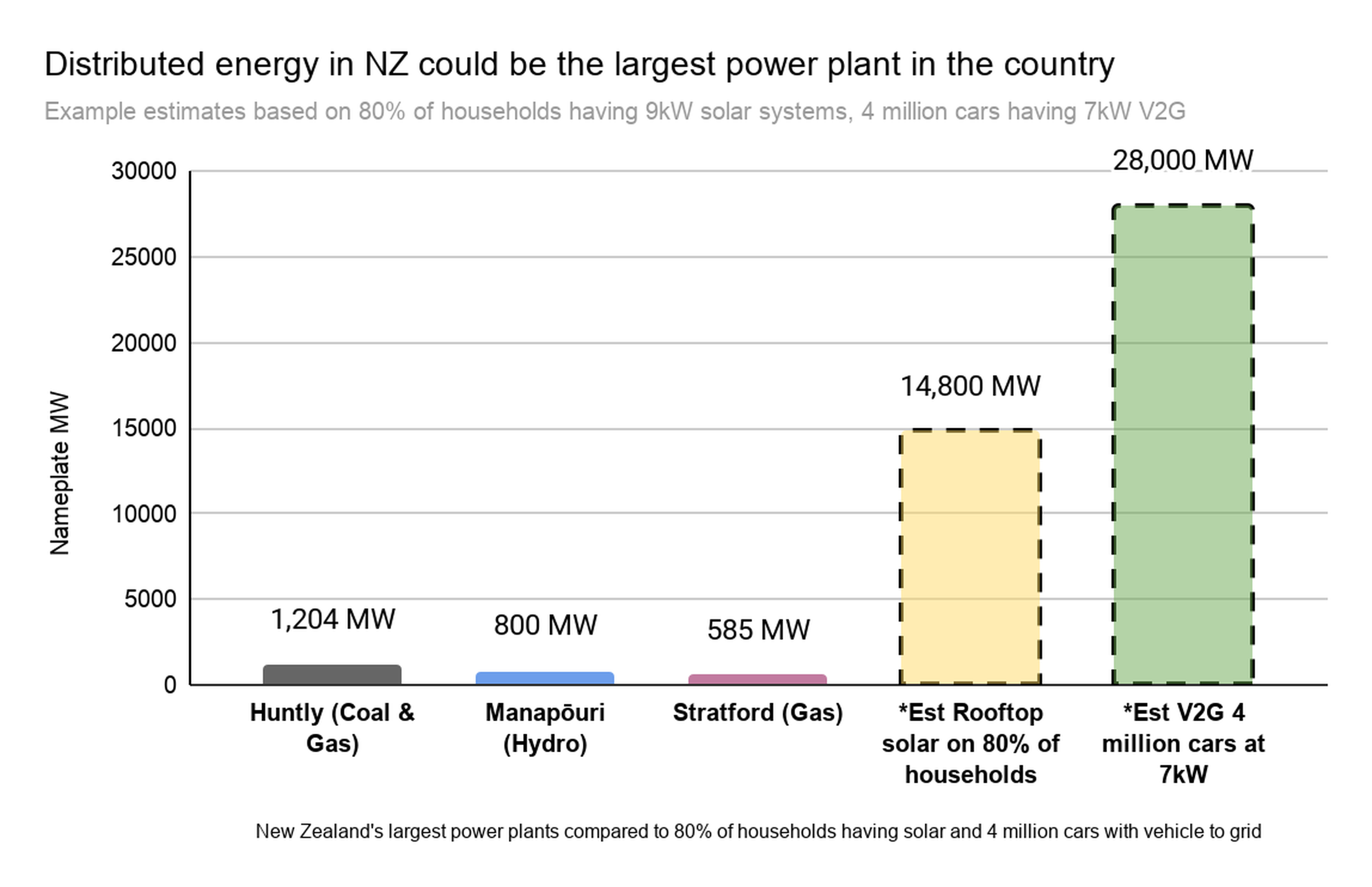
Spread across millions of homes, small-scale rooftop solar and EV batteries add up to grid-scale capacity - rivalling and exceeding New Zealand's largest power stations.
The proof
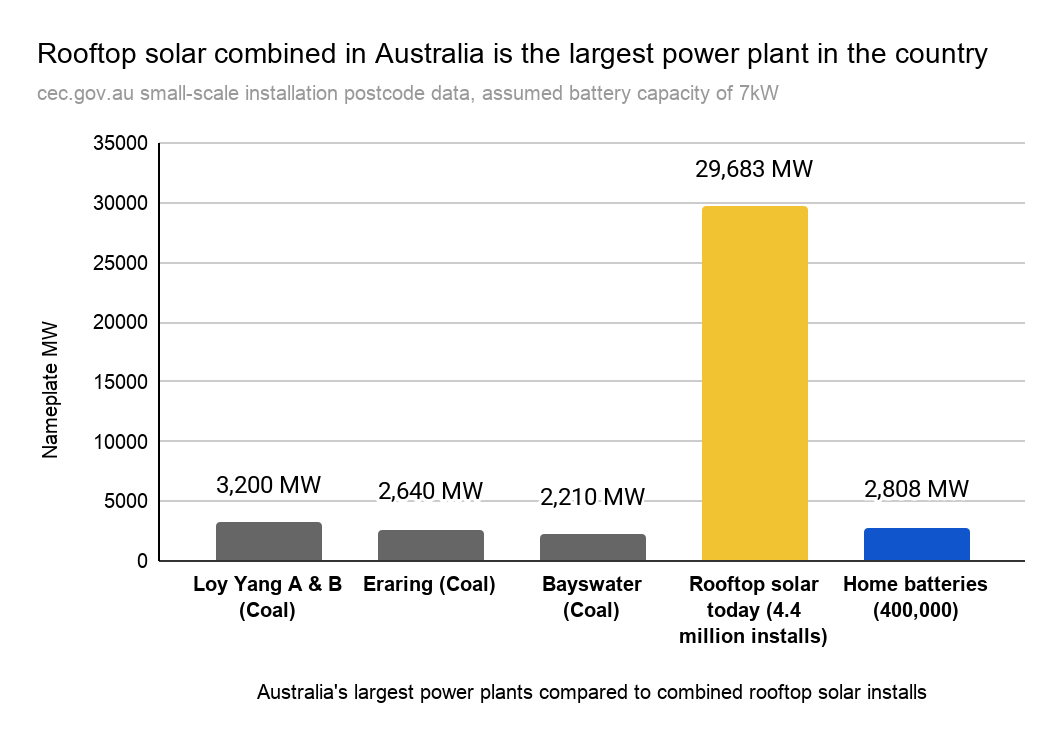
Across the Tasman, combined rooftop solar is now the single largest source of generating capacity in the country.
If we all did it
If 80% of homes installed these systems it would provide ~46% additional electricity, nearly doubling hydro generation - a nameplate capacity larger than all power plants combined (14.8 GW), and batteries peaking at 8.2 GW, about six times Huntly.
Electric vehicles would have a combined battery output capacity around three times larger than all power stations in New Zealand combined.
Household electrification could remove around 10 million tonnes of emissions at a net economic gain - a third of gross CO₂ and an eighth of all GHG emissions.
The lowest-income 20% of households spend five times more of their disposable income on home energy than the highest 20% - and 330% of what the average home spends.
Efficiency
The cost to do a task - like driving or heating water - is the cost of the energy times the amount the machine uses. Gas or diesel may be cheaper per unit, but electric machines are three to four times more efficient, so the productive cost of doing the same task is much lower. Less energy is needed overall.
Post the second oil shock of the 1970s, energy policy shifted massively around the globe. I am anticipating a repeat in the coming years, as energy security becomes paramount. Households are dealing with cost of living pressures, with energy costs one component. New Zealand must be a good global citizen and meet environmental responsibilities; our trade access to many countries depends on it. At the same time, pricing signals have shifted in solar's favour and society is going to hear the word electrification a lot over the coming years. Rewiring Aotearoa's work shows a path forward. There will be more paths. The status quo's time has passed.
Cameron Bagrie - independent economist & peer reviewer of Electric Homes and Vehicles
Savings by machine
Homes aren't binary. Some already have solar but drive petrol; others have a heat pump but use gas for hot water. Each electric machine brings different savings that all add up.
What are the barriers?
Pricing and regulation haven't kept pace with technology. The system is still built around large, centralised generation, so the value households create - like exported solar - is under-recognised and under-rewarded.
The savings are real but locked behind upfront capital. Access to cheap finance is now intrinsically linked to lower energy bills - which wasn't historically the case - yet many households can't get it.
Existing products don't match the long, stable payback of electrification. Lower-income households especially can't access the savings without help, even though they'd benefit most.
What we need to change
We need an energy strategy built around households - the largest energy decision-makers in the country - not around the system as it was designed decades ago.
Capture the impact of household investment on energy bills, account for modern innovation, and give households strong, fair and unbiased representation in the energy system.
Enable mass investment by consumers. Spread the upfront cost of energy decisions over longer time periods so more households can act.
Energy system failures hit vulnerable homes hardest. The lowest-income households spend the greatest share of their income on energy - they should benefit first.
Download the Electric Homes & Vehicles 2026 report, or explore the research, tools and resources at Rewiring Aotearoa.