
Electric Farms
For decades farming has played a significant role in New Zealand's economy. Electrifying our farms presents a real opportunity for farms and rural communities to reduce their costs, diversify their income and play a significant role in New Zealand's renewable energy system.
Sign the letterWatch
New Zealand-Made Energy

See how New Zealand can power itself with homegrown energy. From cherry farms running on solar to households slashing their bills — the future is already here for thousands of Kiwis.
Electric machines running on New Zealand-made electricity are cheaper, more reliable and cleaner than imported fossil fuels.
How you can help
Add your name to the letter
By signing our letter and selecting the things that are most important to you, you'll show the Government there is support for our ideas — and roadblocks that need to be removed to make them happen. Our farms could be New Zealand's future power plants. Together, we can create a win-win solution for our farms, communities and the environment.
To: Hon Todd McClay, Minister of Agriculture
Farmers are the future of our energy system, but there are some barriers in the way. I'm adding my name to Rewiring Aotearoa's call for change. I'm calling on you to:
-
Federated Farmers is asking for this and the Ministry of Regulation is conducting a review. We're happy to support them because there are currently a number of unreasonable restrictions placed on farmers and the rules can differ between regions.
We want all District Plans to allow mid-scale ground-mounted solar installations as a permitted activity on farms and ensure solar under a certain size is not seen as a new business activity. Farms located in an Outstanding Natural Landscape should be allowed to install solar on existing rooftops and on smaller ground-mounted systems and micro-hydro schemes that are non-consumptive should not need a resource consent.
-
Solar on farms is very different to solar farms. If all our 50,000 or so farms had mid-sized solar systems, that would equate to around 60% more renewable generation and help bring the price of electricity down for everyone. Solar is particularly helpful in a dry year and can help keep water in the hydro lakes, while farmers that use more electricity in summer are extra helpful when demand for power is high in winter. This must be incorporated into the decisions we make about future investments in our energy system.
-
A battery in a farmer's shed needs to be seen as a competitor to any other electricity supplier and if it is cheaper to access the farmer's energy, then that infrastructure should be prioritised. Larger battery systems can remove multiple homes from peak and reduce the need for expensive investment in poles and wires, which are paid for by customers. Incentivising investment will require farmers to be compensated fairly for their contribution.
Multiple trading relationships and peer-to-peer trading should also be implemented so farmers can sell to anyone. This means farms can get the best deal for the electricity they buy and sell, and local customers can also benefit by accessing low cost resilient solar supply generated nearby.
-
Multiple electricity connections on one farm should be able to be grouped together so farmers can make the most of their solar generation, rather than have to export low and import high. (The other way to solve this is using the peer-to-peer trading solution above - where solar can be sold and purchased between nearby connections for the same price.)
-
Providing low-cost finance to farmers to de-risk the upfront capital cost of electric machines and on-farm generation and storage is critical if we hope to speed up adoption. The private market is coming to the party in some cases, but the Ratepayer Assistance Scheme, which would offer low-interest long-term loans for electric upgrades will also greatly assist the rural community and help them to electrify.
-
Installing mid-scale generation and storage on farms is often a gateway drug to electrification. That will reduce energy emissions in the agriculture sector and across the country, while also increasing on-farm productivity.
·
You're on the letter.
Thanks for signing — your name has been added to the letter.
The Big Finding
Early generations of farmers had to learn to be self-sufficient and make the most of the resources they had around them. And what farmers have around them now is plenty of land, lots of sun, increasing demand for renewable electricity and a need to save money and diversify their revenue streams. Using, creating and storing more electricity on New Zealand's farms is in the best economic and environmental interests of the rural and energy sectors and New Zealand as a whole.
Report Highlights
Four reasons to electrify the farm.
Farmers can create new revenue streams by installing solar panels and batteries
With the right conditions, farmers can invest in assets that save money on operational costs and can also create an additional revenue stream by producing and storing solar power and timing export perfectly for when it is most valuable. There is also potential for farms to play in a role in the national electric vehicle charging network.
Farmers can immediately save on energy costs by electrifying their fossil fuel machines
The agriculture sector spends around $700 million on diesel each year (and much more now given the high price of diesel as a result of the conflict in the Middle East). Shifting away from diesel machines is a huge economic opportunity for farms because electric machines are so much cheaper to run. When powered by solar and batteries, farms can dramatically reduce their energy bills and improve their resilience
New Zealand needs more renewable electricity and farmers are perfectly placed to provide it
Farms are in a unique position to provide mid-scale renewable electricity solutions that can bolster the country's energy security. They have greater buying power than individual households; they have the land and space to install much larger systems than households; they are usually owner-operators who can make their own decisions and are not burdened with cumbersome consenting processes; and they often have access to finance and are generally well-placed to take on long term investments, especially those that will save money.
Electrification is the low-hanging fruit of agricultural emissions reduction
A significant amount of on-farm emissions come from fuel use. Farmers can make a difference right now — while also reducing the country's dependence on increasingly expensive carbon offsetting — by electrifying their fossil fuel machines.
Data Spotlight
The numbers behind the case for electric farms.
What's an electric farm?
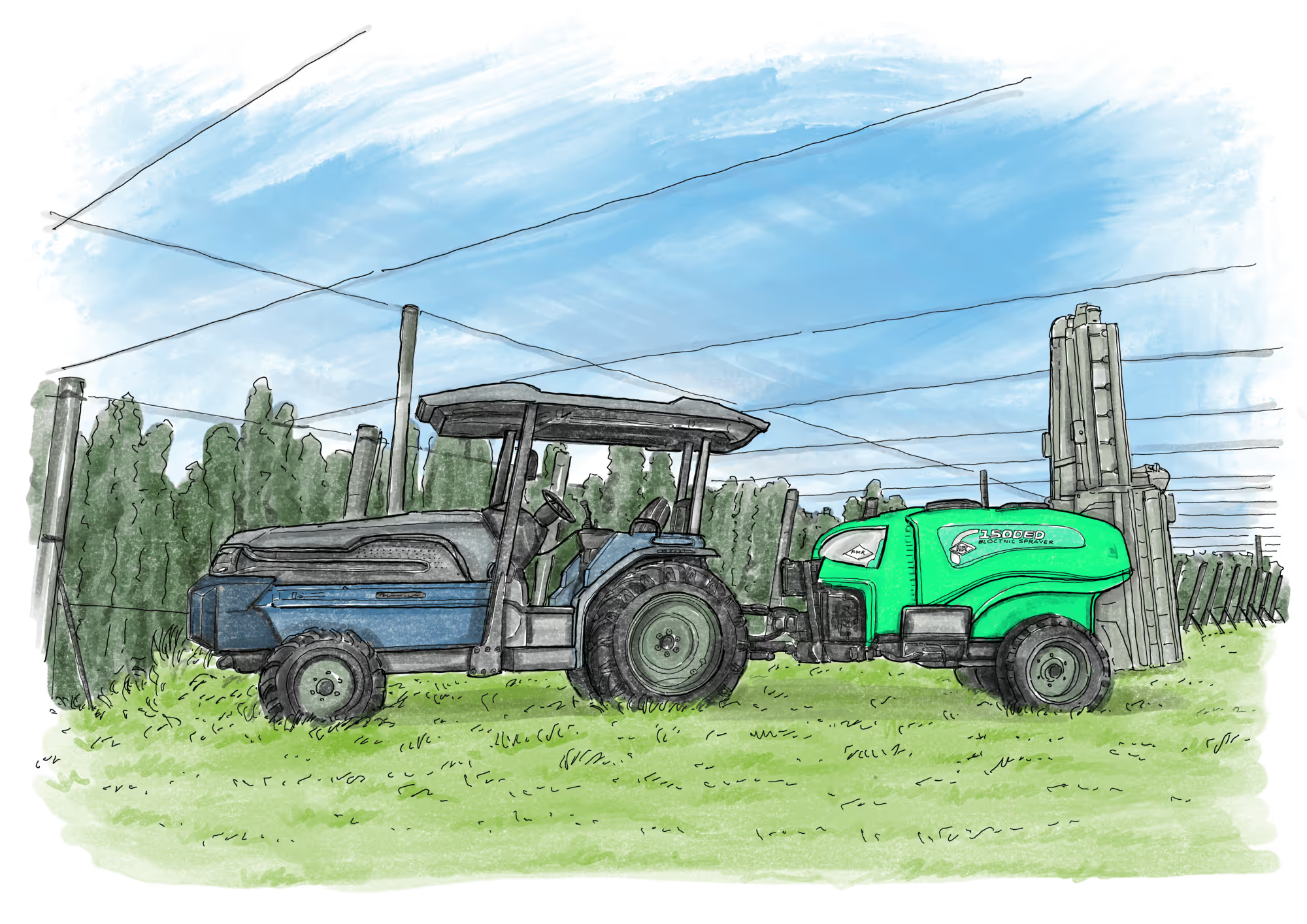
Modern farming is heavily dependent on diesel machines like tractors, motorbikes, pumps and harvesters. An electric farm swaps some or all of those fossil fuel machines for electric equivalents and powers them with a combination of solar panels, battery banks and New Zealand's highly renewable grid. If enough generation capacity is built, electric farms can also play a role in the energy system and create a new revenue stream for farmers by selling renewable electricity to the grid during times of peak demand.
Case Study
Forest Lodge Orchard
Forest Lodge Orchard is making on-farm cost savings through electrification that can be realised by all farms.
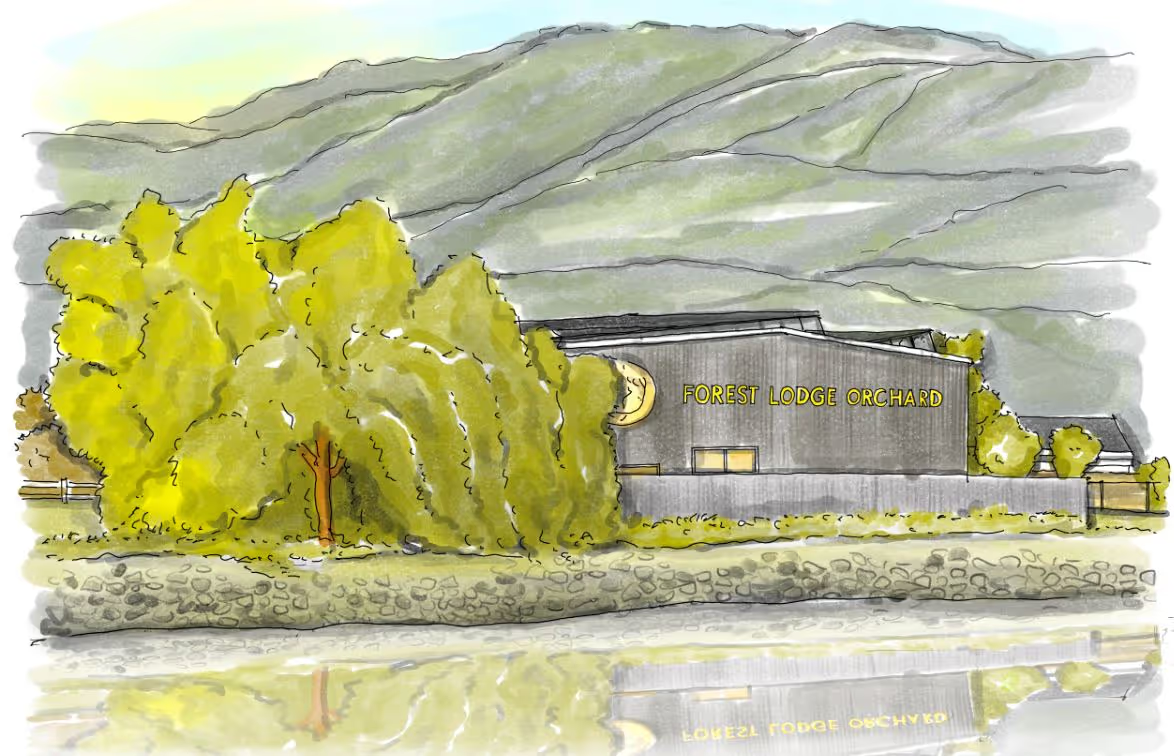
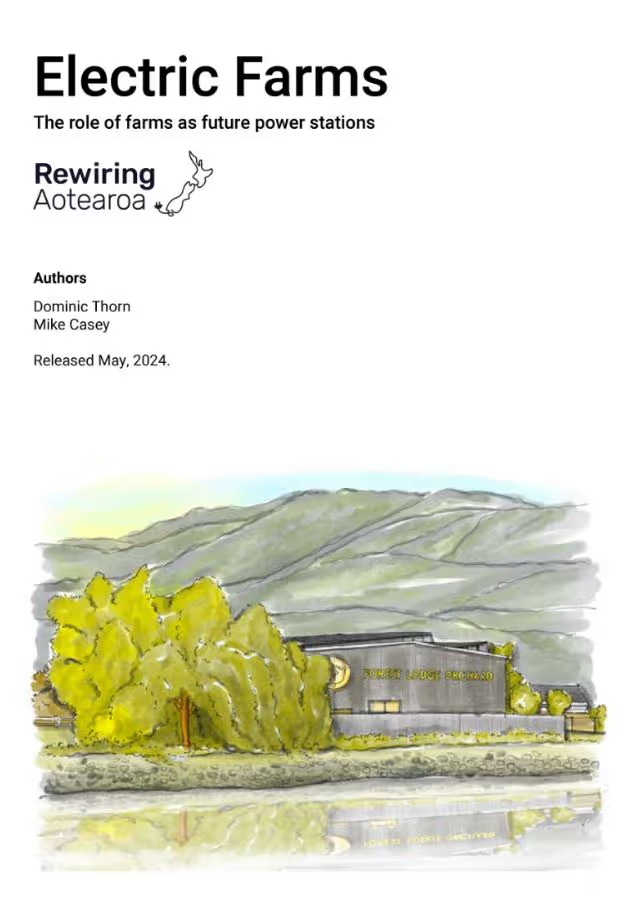
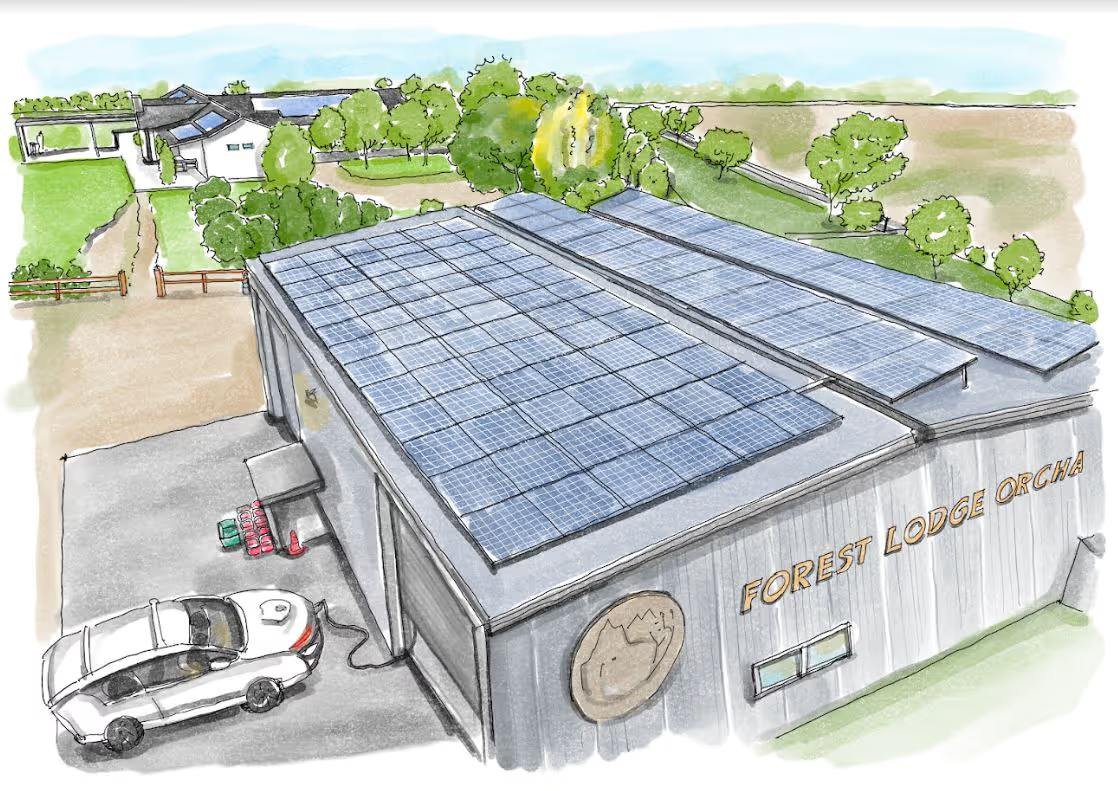
Forest Lodge Orchard in Central Otago has installed 160 kW of solar panels on rooftops and 300 kWh of batteries to power the home and farm. It has also electrified all of its on-farm machinery, including two electric frost fighting fans, electric golf carts and New Zealand's first electric tractor. Rooftop solar and a battery bank provides about 90% of the farm's electricity needs, so although electricity use has increased by about 900% and it requires a lot more electricity from the grid than the previous farmer, the peak drawdown from the grid has remained low. No more local distribution infrastructure has been required and no new poles and lines needed to be built.
After electrification, the farm saves almost $40,000 a year across the farm and home from avoided costs of diesel, avoided electricity network lines charges and by exporting excess power back to the grid when prices are high. For example, diesel frost fans burn large amounts of fuel and can cost over $10,000 a year to run, whereas Forest Lodge Orchard's two 30 kW electric frost fans are more efficient at 20% the operational cost. Similarly, the 40 hp electric tractor does the job of an 80 hp diesel equivalent thanks to the benefits of electric power, and costs a fraction of the price to run.
Through an innovative trial with the local Electricity Distribution Business (EDB), Aurora Energy, Forest Lodge Orchard estimates it will earn about $20,000 of extra revenue by providing power back to the grid during peak periods. With smart use of their batteries, it can ensure it is supplying energy to the grid when it is most needed. This is the first step in creating an electricity system that rewards farmers for contributing to reduced peak pressures on large-scale generation and distribution.
How's your energy?
Rewiring Aotearoa and ASB are working together to explore the potential cost and emissions savings of rural electrification, the barriers farmers face, and how on-farm energy resilience can be improved.
If you produce food or fibre in New Zealand, we want to hear from you. It will be easiest if you have an idea of your average on-farm electricity and fuel costs, and the machines on farm.
FarmCharge
Could an answer to New Zealand's lack of electric vehicle charging infrastructure be found on farms?
We believe there is potential for farmers to play a role in fulfilling National's promise of rolling out 10,000 EV chargers across the country. Farmers investing in mid-scale solar and battery systems could not only power their own machines much more affordably (or offer staff free EV charging) and earn money for sending electricity back to the grid at peak times, but they could also become part of an extensive national charging network and create another new revenue stream.
Farms are usually very close to the medium voltage networks, meaning they can scale up renewable systems without physical constraints or undue overloading risks to the distribution networks.
What We Need
Here's what we need to turn farms into future power plants.
Recognise the role farms can play in the energy system
Rooftop solar is now the cheapest source of delivered energy for New Zealanders and large-scale infrastructure continues to increase in price, so the case for more focus on customer generation has never been stronger. This must be incorporated into the decisions we make about future investments in our energy system.
Develop farm-focused finance for electrification
Providing low-cost finance to farmers to de-risk the upfront capital cost of electric machines and on-farm generation and storage is critical if we hope to speed up adoption.
Fairly reward farmers for their contribution
A battery in a farmer's shed needs to be seen as a competitor to any other electricity supplier and if it is cheaper to access the farmer's energy, then that infrastructure should be prioritised. Incentivising investment will require farmers to be compensated fairly for their contribution.
Develop mid-scale products for farmers
Rooftop solar and battery installations that suit farms should be brought to the market and targeted at farmers. Rural retailers could play a crucial role here.
Remove unreasonable restrictions on farmers
All District Plans should allow mid-scale ground-mounted solar installations as a permitted activity; farms located in an Outstanding Natural Landscape should be allowed to install solar on roofs and on smaller ground mounted systems; micro-hydro schemes that are non-consumptive should not need a resource consent; and multiple electricity connections on one farm should be able to be grouped together for billing purposes, something known as net metering.
Push electrification for emissions reduction
By enabling more New Zealand farms, homes and businesses to electrify without putting undue pressure on the electricity network, installing mid-scale generation and storage on farms will reduce energy emissions in the agriculture sector and across the country.
Stay Current.
Join our mailing list for a regular buzz of electrification inspiration and information. Your donations help our team keep the momentum of rapidly electrifying Aotearoa New Zealand within our key focus areas of community, government and industry.
Visit rewiring.nz